
Frozen Pipes, Ice Dams, and Flooding: Which Colorado Water Damage Claims Actually Get Paid?
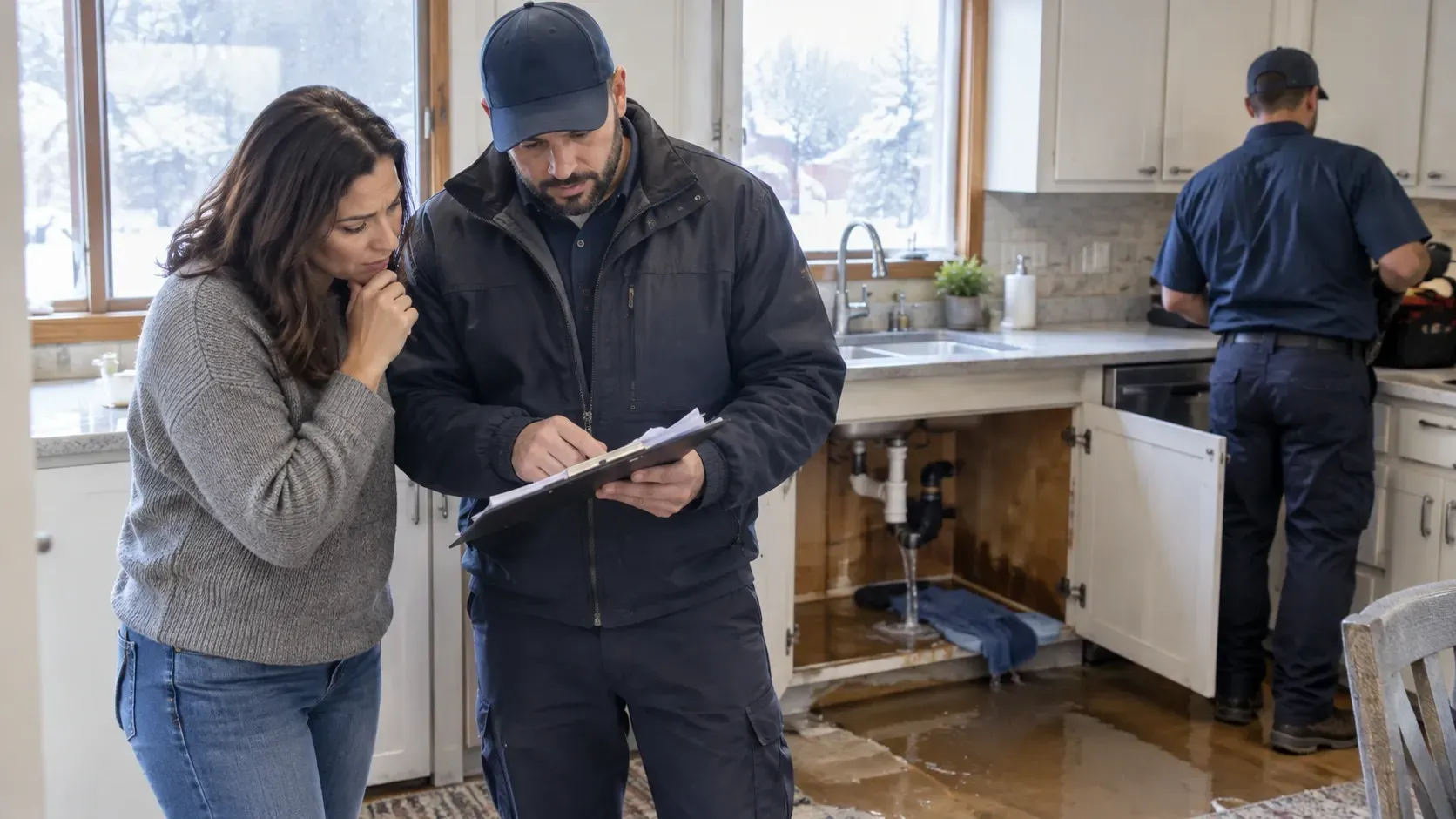
Table of Contents
- Introduction
- Which Colorado water damage claims actually get paid?
- Why These Three Losses Are Not Treated the Same
- Frozen Pipe Claims
- Ice Dam Claims
- Flood Claims
- A Framework for Figuring Out What You Are Dealing With
- Common Misunderstandings About Winter Water Damage
- A Realistic Scenario
- Risks, Limitations, and What Typical Advice Overlooks
- Conclusion
- Questions About Water Damage Claims in Denver
- Frequently Asked Questions
Key Takeaways
- Frozen pipe damage, ice dam damage, and flooding are three distinct categories under a homeowners policy, and each is evaluated using different rules.
- Frozen pipe claims are commonly covered, but insurers look closely at whether the homeowner took reasonable steps to prevent freezing, such as maintaining heat.
- Ice dam damage is often covered as a form of winter weather damage, though the cause behind the ice dam, such as poor attic insulation, can affect how the claim is viewed.
- Flooding from rising water outside the home is typically excluded from a standard policy and requires separate flood insurance.
- The source and mechanism of the water, not just the visible damage, is what usually decides which rules apply to a claim.
Introduction
Frozen pipes, ice dams, and flooding are not treated the same way under a homeowners policy, and the difference comes down to where the water originated and what caused it to get into the home. A water damage claims adjuster typically evaluates frozen pipe damage and ice dam damage as covered perils tied to winter weather, while flooding from rising water outside the home is usually excluded and requires a separate flood policy.
This distinction matters a great deal in a place like Denver, where hard freezes, heavy snow loads, and spring runoff can all cause water damage within the same winter and spring season. A homeowner who assumes any water in the house is automatically covered, or automatically excluded, can be caught off guard either way.
This guide walks through how frozen pipe insurance coverage works, how ice dams are evaluated, where flood coverage fits in, and how to figure out which category applies before you file a claim.
Which Colorado water damage claims actually get paid?
Frozen pipe claims and ice dam claims are generally paid under a standard homeowners policy when the damage resulted from a sudden event and the home was reasonably maintained. Flood claims, meaning water entering from outside the home, are generally not paid under a standard policy and require separate flood insurance.
The reasoning is consistent with how insurers categorize water losses nationally, not just in Colorado. Internal plumbing and winter weather perils are considered manageable, predictable risks that a standard policy is built to handle. External flooding is treated as a separate, geographically concentrated risk that is priced and insured differently, most often through the National Flood Insurance Program or a private flood carrier.
Within the frozen pipe and ice dam categories, coverage can still depend on details like how quickly the problem was addressed and whether the home was properly heated and maintained, which the next sections cover.
Why These Three Losses Are Not Treated the Same
The Source and Mechanism Matter More Than the Damage
Two homes with similar soaked drywall and damaged flooring can have very different claim outcomes depending on how the water got there. A pipe that burst from freezing, ice that backed water up under shingles, and a creek that overflowed its banks are three different mechanisms, even if the end result in the living room looks similar.
Insurers Separate Sudden Events From Preventable Neglect
Across all three categories, insurers distinguish between damage from a sudden event and damage that resulted from a homeowner failing to take reasonable care of the property. This distinction shows up repeatedly, whether the issue is a frozen pipe, an ice dam, or ongoing roof neglect that worsened winter damage.
Frozen Pipe Claims
How Frozen Pipe Damage Happens
Water inside a pipe expands as it freezes, and that expansion can split the pipe. When the ice later thaws, water escapes, sometimes suddenly and sometimes slowly as the full extent of the crack becomes apparent. This is one of the more common causes of frozen pipe damage addressed under frozen pipe insurance coverage.
What Insurers Typically Look For
Adjusters reviewing a frozen pipe claim generally consider how the homeowner maintained heat in the property, whether vacant periods were handled appropriately, such as keeping the thermostat at a reasonable minimum, and how quickly the leak was discovered and addressed once it occurred.
Most policies include language requiring the policyholder to use reasonable care to protect the property, including during cold weather. A home left without heat for an extended period during a hard freeze can raise questions about whether that duty was met.
What to Document
Photos of the burst pipe itself, the surrounding damage, and the heating system's operation at the time of the loss all support a frozen pipe claim. If the home was occupied and heated normally, stating that clearly and providing supporting evidence, such as utility records, strengthens the claim.
Ice Dam Claims
How Ice Dams Form and Cause Damage
An ice dam forms when snow on a roof melts from heat escaping the attic, runs down to the colder eave, and refreezes. Over time, the ice builds a dam that traps water behind it, which can then back up under the shingles and into the home.
Why the Cause Behind the Dam Matters
Ice dam damage itself is often covered as sudden and accidental water damage. However, the underlying cause, frequently inadequate attic insulation or ventilation that allows uneven roof temperatures, can become relevant if an insurer views the condition as a long-standing maintenance issue rather than a one-time weather event.
What Tends to Help a Claim
Documentation showing the storm or snow event that led to the ice dam, along with the resulting interior damage, supports the claim. If the home has had attic insulation or ventilation issues addressed or inspected, that history can also be useful context.
Flood Claims
What Counts as a Flood
A flood, in insurance terms, involves water entering the home from an external source, such as an overflowing river or creek, rapid accumulation of surface water, or mudflow. This definition exists because flood risk is handled through a separate insurance system rather than a standard homeowners policy.
Why Denver Homeowners Should Not Assume They Are Exempt
Denver is not typically thought of as a flood-prone city, but spring snowmelt and sudden, intense storms can produce flash flooding along waterways and in low-lying areas. Flood maps indicate risk levels, not guarantees, and flooding has occurred in areas outside mapped high-risk zones during unusually heavy precipitation.
The Separate Coverage Requirement
Because a standard homeowners policy typically excludes flood damage, Colorado homeowners and business owners who want protection against this type of loss generally need a separate flood insurance policy, most commonly through the National Flood Insurance Program or a private carrier.
A Framework for Figuring Out What You Are Dealing With
When water damage occurs and the cause is not immediately obvious, a short set of questions can help clarify which category likely applies.
- Where did the water originate? Inside the home from a pipe or roof assembly points toward frozen pipe or ice dam coverage. Outside the home from rising water points toward flood.
- Was the event sudden or the result of an ongoing condition? A pipe that burst suddenly is treated differently than long-term condensation or neglect.
- Did a specific weather event precede the damage? A hard freeze, a heavy snowstorm, or an intense rain event helps establish timing and cause.
- What does your policy's definitions section say? Policies define both water damage and flood explicitly, and the exact wording controls more than general assumptions do.
- Do you carry separate flood insurance? If the loss fits the flood definition and you lack a flood policy, the standard exclusion will likely apply.
This framework does not replace a professional assessment. For a closer look at how a public adjuster reviews a claim, from policy review through documentation, this overview walks through each step of the process.
Common Misunderstandings About Winter Water Damage
Common belief: "Any water damage from winter weather should be covered."
What is actually true: Coverage depends on the specific mechanism, frozen pipe, ice dam, or flood, and each is evaluated under different policy provisions. Why it matters: assuming blanket winter coverage can lead to confusion when a claim involving external flooding is denied.
Common belief: "If my roof leaked during a snowstorm, it must be an ice dam."
What is actually true: Roof leaks during winter can also result from pre-existing roof damage, poor flashing, or ventilation issues unrelated to ice buildup. Why it matters: the actual cause determines how the claim is evaluated, not just the season in which it occurred.
Common belief: "I do not live near a river, so flooding is not something I need to worry about."
What is actually true: Flash flooding from heavy rain or rapid snowmelt can occur away from major waterways, particularly in areas with poor drainage. Why it matters: proximity to water is not the only factor that determines flood risk.
A Realistic Scenario
The following is a hypothetical example for illustration, not an actual client case.
Imagine a Denver homeowner who leaves for a two-week trip during a stretch of subzero temperatures, turning the thermostat down to save energy. A supply line in an upstairs bathroom freezes and bursts while they are away, and by the time they return, water has soaked through two floors of the home.
An adjuster reviewing the claim focuses heavily on the thermostat setting and how long the home went without adequate heat. If the temperature was kept at a reasonable minimum consistent with the policy's requirements, the claim is likely to proceed as a standard frozen pipe loss. If the home was left without heat entirely during an extended freeze, the insurer may raise questions about whether reasonable care was taken to prevent the loss.
This scenario shows that even within a single category like frozen pipe claims, the specific facts, not just the general cause, shape the outcome.
Risks, Limitations, and What Typical Advice Overlooks
General explanations often stop at listing the three categories without addressing the practical complications.
What Gets Missed About Combined Causes
A single winter storm can produce more than one type of damage at once, a frozen pipe in one part of the house and an ice dam in another, for example. Untangling which portion of the damage falls under which provision can require a careful, itemized assessment rather than a single blanket conclusion.
What Gets Missed About Vacant or Seasonal Properties
Homes that sit vacant for extended periods, including vacation properties, may have specific policy requirements around maintaining heat or having the property checked periodically. These requirements are often stricter than what applies to a primary residence.
What Gets Missed About Sump Pump and Sewer Backup
Water damage during snowmelt or heavy rain can also come from a failed sump pump or a sewer backup, which is often treated separately from both standard water damage and flood coverage. Many policies require a specific endorsement for this type of loss, and its absence is a common and easily missed coverage gap.
What Gets Missed About Policy Language Differences
Definitions of covered water damage and excluded flood are not identical across every insurer. Two homeowners with similar damage but different carriers can see different outcomes, which is why reading your own policy's specific wording matters more than general assumptions about how these claims typically work.
None of this means outcomes are unpredictable or arbitrary. It means the mechanism, timing, and your policy's exact language carry real weight in how a claim is resolved.
Conclusion
Frozen pipes, ice dams, and flooding are three distinct categories of water damage under a homeowners policy, and understanding which one applies to your situation is central to knowing what a water damage claims adjuster is likely to find. Frozen pipe and ice dam claims are generally covered when the damage resulted from a sudden event and the property was reasonably maintained, while flooding from an external source typically requires separate flood insurance.
The most reliable way to approach a winter water loss is to identify where the water came from, document the event thoroughly, and check your policy's specific definitions rather than relying on general assumptions. A claim built on a clear understanding of the actual cause is in a stronger position than one based on how the damage looks on the surface.
Questions About Water Damage Claims in Denver
If your home or business in the Denver area has experienced water damage from a frozen pipe, an ice dam, or flooding, and you are unsure which category applies or what to document, you are welcome to
reach out with your questions. A short, no-pressure conversation can help you understand your situation, with no obligation to move forward.
Frequently Asked Questions
Are frozen pipe claims usually covered under a homeowners policy?
Yes, in most cases, as long as the damage resulted from a sudden event and the home was reasonably maintained, including keeping adequate heat during cold weather. Extended neglect can affect how the claim is evaluated.
Is ice dam damage treated the same as flood damage?
No. Ice dam damage is generally treated as winter weather damage under standard water damage provisions, while flood damage refers to water entering from an external source and typically requires separate flood insurance.
Does my homeowners policy cover flooding in Denver?
Usually not. Standard homeowners policies typically exclude flood damage. Colorado homeowners who want protection against flooding generally need a separate policy through the National Flood Insurance Program or a private flood carrier.
What if I cannot tell whether my water damage was from an ice dam or a roof leak?
A professional inspection is the most reliable way to determine the cause, since the source of the water affects how the claim is categorized and evaluated under your policy.
Do I need to winterize my home to keep frozen pipe coverage?
Policies generally require reasonable care to prevent freezing, such as maintaining adequate heat, especially if the property is vacant for extended periods. Review your specific policy for any stated requirements.